By Abdul Rahman Bah
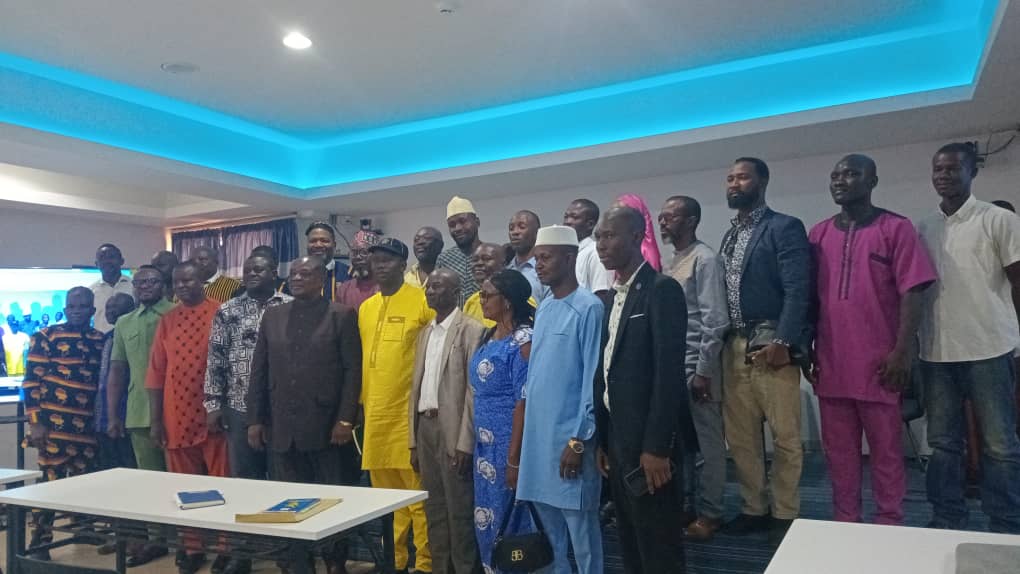
At the headquarters of the Electoral Commission for Sierra Leone at Tower Hill in Freetown on Wednesday 1 April 2026, the Chief Electoral Commissioner and Chairman, Edmond Sylvester Alpha, held a crucial engagement with registered political parties in a renewed effort to strengthen trust and reinforce democratic dialogue across the country. The meeting brought together a wide range of political stakeholders, including Sierra Leone People’s Party, National Grand Coalition, People’s Democratic Party, United National People’s Party, People’s Liberation Party, National Democratic Alliance, Revolutionary United Reform Party, Reformed National Party, Alliance Democratic Party, United Democratic Movement, Coalition for Change and People’s Movement for Democratic Change, among others, underscoring the inclusive nature of the dialogue and the collective responsibility in shaping Sierra Leone’s electoral future.
In his address, Commissioner Alpha expressed appreciation for the strong turnout, particularly highlighting the presence of the registered Pololitical Parties and the media, whom he described as essential pillars in promoting transparency and accountability. He emphasized that the very act of convening such a meeting reflects a shared commitment to dialogue, noting that sustained engagement among stakeholders remains the foundation upon which democratic trust is built and maintained.
Reflecting on Sierra Leone’s democratic trajectory, Commissioner Alpha pointed to the significant progress achieved over the past two decades, including institutional reforms and the consistent conduct of elections. He stressed that these gains are the collective achievements of the people of Sierra Leone and not the preserve of any single institution or political party. According to him, safeguarding these democratic milestones requires a unified national effort grounded in cooperation, mutual respect, and a commitment to peace.
Addressing concerns raised by various stakeholders in recent times, the Commissioner adopted a reconciliatory tone, acknowledging that tensions within the political space are real and must be addressed with sincerity and openness. He made it clear that the role of the Commission is not to defend positions or engage in political contestation, but rather to build understanding, foster confidence, and ensure that the electoral process remains credible and trusted by all.
He reaffirmed the neutrality and independence of the ECSL, emphasizing that the Commission does not determine electoral outcomes but instead provides a transparent and accountable platform through which the will of the people is expressed. He noted that elections are ultimately decided by voters, and the Commission’s responsibility is to ensure that every vote counts within a system that is fair, inclusive, and transparent.
Commissioner Alpha further assured political parties that their concerns are valid and play a critical role in strengthening the electoral system. He reiterated the Commission’s readiness to engage continuously with all stakeholders, encouraging open dialogue as a means of resolving differences and improving electoral processes. He stressed that inclusivity and participation must remain at the center of all electoral reforms.
Expanding the discussion beyond election day, the Commissioner highlighted that electoral integrity encompasses the entire electoral cycle, including legal frameworks, operational preparedness, civic education, dispute resolution, and stakeholder confidence. He referenced ongoing reform discussions emerging from national consultations, describing them as an opportunity for collective growth and institutional strengthening rather than division.
He emphasized that key reform areas include improving transparency in results management, strengthening communication with the public, enhancing stakeholder engagement, and building trust among political actors. While noting that the Commission is committed to implementing these reforms, he underscored that their success depends heavily on the willingness of political parties and other stakeholders to participate constructively in the process.
Looking ahead, Commissioner Alpha outlined a path forward centered on cooperation and sustained engagement. He revealed plans to reinforce political party regional committee meetings, revive inter-party dialogue platforms, and establish technical working groups that will include party representatives to address key electoral and operational issues. He also indicated that the Commission intends to develop a shared electoral roadmap leading to the 2028 elections, ensuring that both institutional priorities and stakeholder inputs are reflected.
In his concluding remarks, Commissioner Alpha called on all political actors to rise above divisions and work together in the national interest. He emphasized that democracy thrives not on uniformity of opinion but on the willingness to engage constructively despite differences. He urged stakeholders to focus on rebuilding trust, strengthening institutions, and upholding the will of the people.
The engagement marks a significant step by the ECSL in deepening collaboration with political parties, setting the stage for continuous dialogue aimed at enhancing transparency, credibility, and public confidence in Sierra Leone’s electoral system as the country looks ahead to future elections.