BY Fomba M. Sheriff
A Freetown-based investigative journalist, Fomba M. Sheriff, has examined documentary records, medical certificates and accounts connected to a violent incident in Malolom Village, Moyamba District–Sierra Leone in January 2024, uncovering a disturbing chain of events involving traditional authority, forced initiation, physical violence, continuing threats and the deaths of two men.
BACKGROUND TO THE CASE
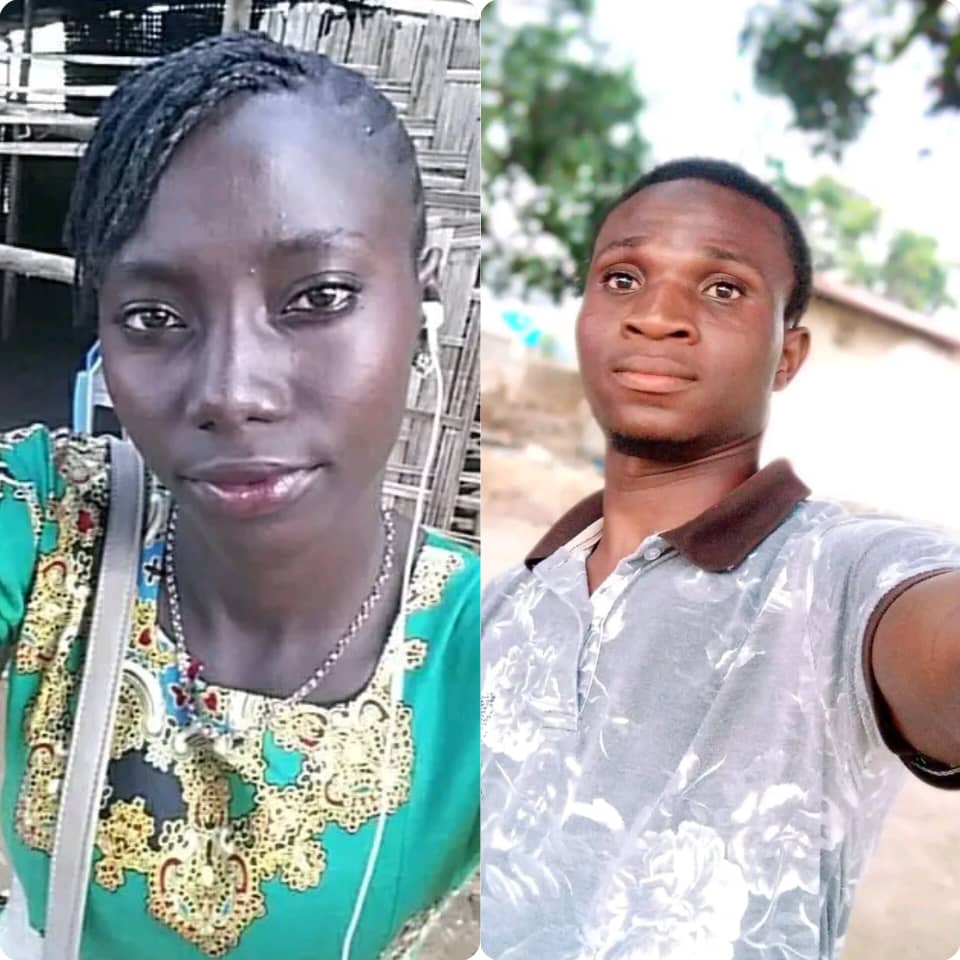
At the centre of the case are Kadija Koroma, born on 2nd October 2002, and her husband, Abubakarr Karim Samura, born on 4th April 2000. Both are Sierra Leonean nationals who were born and raised in Freetown.
According to an investigation done by this medium, what began as a family bereavement following the death of Kadija’s mother developed into a confrontation that left two men dead and the couple with documented physical and psychological injuries.
Kadija Koroma worked as a trader before leaving Sierra Leone. Her mother, Isatu Koroma, died in January 2024 in Malolom Village, Moyamba District.
Isatu was a Sowe and a traditional leader associated with the Bondo society.
Following her mother’s death, Kadija travelled from Freetown to Malolom to take part in the funeral and family arrangements.
It was during this period that members of the Bondo society determined that Kadija would assume her mother’s traditional position and undergo the associated initiation.
Kadija did not consent to the initiation.
The evidence examined during this investigation states that she was subsequently taken into the Bondo bush against her will and was unable to leave freely.
The dispute soon escalated into a confrontation involving Kadija’s husband and three other men.
KADIJA KOROMA’S PERSONAL ACCOUNT
Kadija’s account, as contained in the documents reviewed, describes a situation in which her mother’s death placed her under pressure to assume a traditional role she had not chosen.
After refusing the initiation, she was taken into the Bondo bush.
The situation later became violent. She was physically assaulted and dragged into a wooded area.
ABUBAKARR KARIM SAMURA’S ACCOUNT
Abubakarr Karim Samura was born and raised in Freetown and was Kadija’s husband at the time of the incident.
When Samura learned that his wife had been taken into the Bondo bush, he went to look for her.
Three other men accompanied him.
Their attempt to locate Kadija resulted in a confrontation with members of the Bondo society.
According to the documented evidence reviewed during the investigation, Samura was struck with a glass bottle and attacked with knives.
Two of the three men who accompanied him died during the confrontation.
Samura and Kadija eventually escaped.
The incident left Samura with injuries that were subsequently medically documented.
The medical evidence provides a record of the injuries she sustained.
THE JANUARY 2024 CONFRONTATION
The confrontation in Malolom village represents the most serious turning point in the case.
A disagreement that began around Kadija’s proposed initiation escalated after Samura and the three men entered the area in an attempt to locate and rescue her.
Violence followed.
Two men who had accompanied Samura lost their lives, while Samura and Kadija sustained injuries.
The circumstances raise serious questions about what happened during the confrontation, how the violence escalated, and whether sufficient steps were taken afterward to establish accountability.
ATTEMPT TO SEEK POLICE PROTECTION
Following the confrontation, Kadija and Samura went to Moyamba Police Station and reported what had happened.
According to evidence reviewed during the investigation relating to the attacks and confrontation, Samura was told by the police that he had brought the situation upon himself by entering an area associated with the Bondo society.
However, this medium attempted several times to get an independent police response, no details were provided by the Sierra Leone police Force relating to the circumstances of the incident at the time of the investigation.
SUBSEQUENT THREATS
The incident did not end with the January 2024 confrontation.
The documentary material reviewed indicates that threats continued afterward.
For the couple, the violence therefore became more than a single incident. It was followed by continuing fear and insecurity.
The circumstances raise a further question about the protection available to citizens who report violence and subsequently face threats.
The medical evidence provides a record of the injuries the couple sustained.
ON 29th JULY 2026, THE COUPLE WERE EXAMINED BY Dr. MOTTE ARCHIBALD IN GENAPPE
The medical certificate records scars, cuts and abrasions on her left wrist, right elbow, left thigh and hip, medial left leg, chest near the sternum and left breast.
The certificate also records stress, anxiety, sleep disturbances, and lower-back and lower-limb pain.
The medical history recorded by the doctor states that Kadija was dragged into the woods and beaten during the 2024 incident, sustaining cuts, burns, bruises, and hematomas.
DOCUMENTED INJURIES TO KADIJA
The medical certificate issued after Kadija’s examination provides important documentary evidence of the physical and psychological consequences of the incident.
The scars and injuries documented by Dr. Archibald affect several parts of her body, including her wrist, elbow, thigh, hip, leg, chest and breast and injuries docume
The doctor also recorded psychological symptoms, including stress, anxiety and sleep disturbances.
DOCUMENTED INJURIES TO SAMURA
Samura was also examined by Dr. Archibald.
His medical certificate records scars and cuts on his right wrist, right forehead, and right back near the shoulder blade.
Psychological distress was also recorded.
The medical history states that these injuries were sustained during the 2024 incident when Samura went to rescue his wife and was struck with a glass bottle and attacked with knives.
The medical record does not stand alone as a description of the incident; it forms part of the wider documentary evidence examined during this investigation.
THE DEATHS OF TWO MEN
The deaths of the two men who accompanied Samura remain one of the most serious elements of the case.
They travelled with him to locate Kadija and became involved in the confrontation.
Their deaths transformed the incident from a dispute over initiation into a matter involving loss of life and questions of accountability.
TRADITION, CONSENT AND ACCOUNTABILITY
Sierra Leone’s traditional institutions form an important part of the country’s cultural and social identity.
But respect for tradition cannot mean that violence, coercion or the denial of individual choice should go without scrutiny.
Where traditional practices involve an individual’s body and personal freedom, consent becomes a fundamental issue.
The Malolom village case therefore raises a difficult but necessary question for Sierra Leonean society.
THE GOVERNMENT’S RESPONSIBILITY TO PROTECT CITIZENS
Ultimately, the Malolom incident raises an issue larger than the individuals involved.
When citizens face violence, the responsibility of the state does not disappear because the incident occurs within a traditional setting.
Citizens are entitled to protection regardless of where violence occurs or who is involved.
The deaths of two men, the documented injuries suffered by Kadija and Samura, the continuation of threats, and the unanswered questions surrounding the police response all demand serious attention.
A government cannot protect its citizens only when the circumstances are convenient. Protection must extend to every citizen whose life, dignity, and security are threatened.
For the families affected by the Malolom incident, the consequences are not simply historical. They represent lives lost, injuries sustained, and questions that remain unanswered.
Tradition deserves respect, but human life deserves greater protection. No citizen should be left exposed to violence because a dispute occurs within a traditional setting.
The government has a responsibility to protect its citizens, investigate serious violence, and ensure that no cultural practice becomes a shield for abuse or a barrier to accountability.